
 Pin It
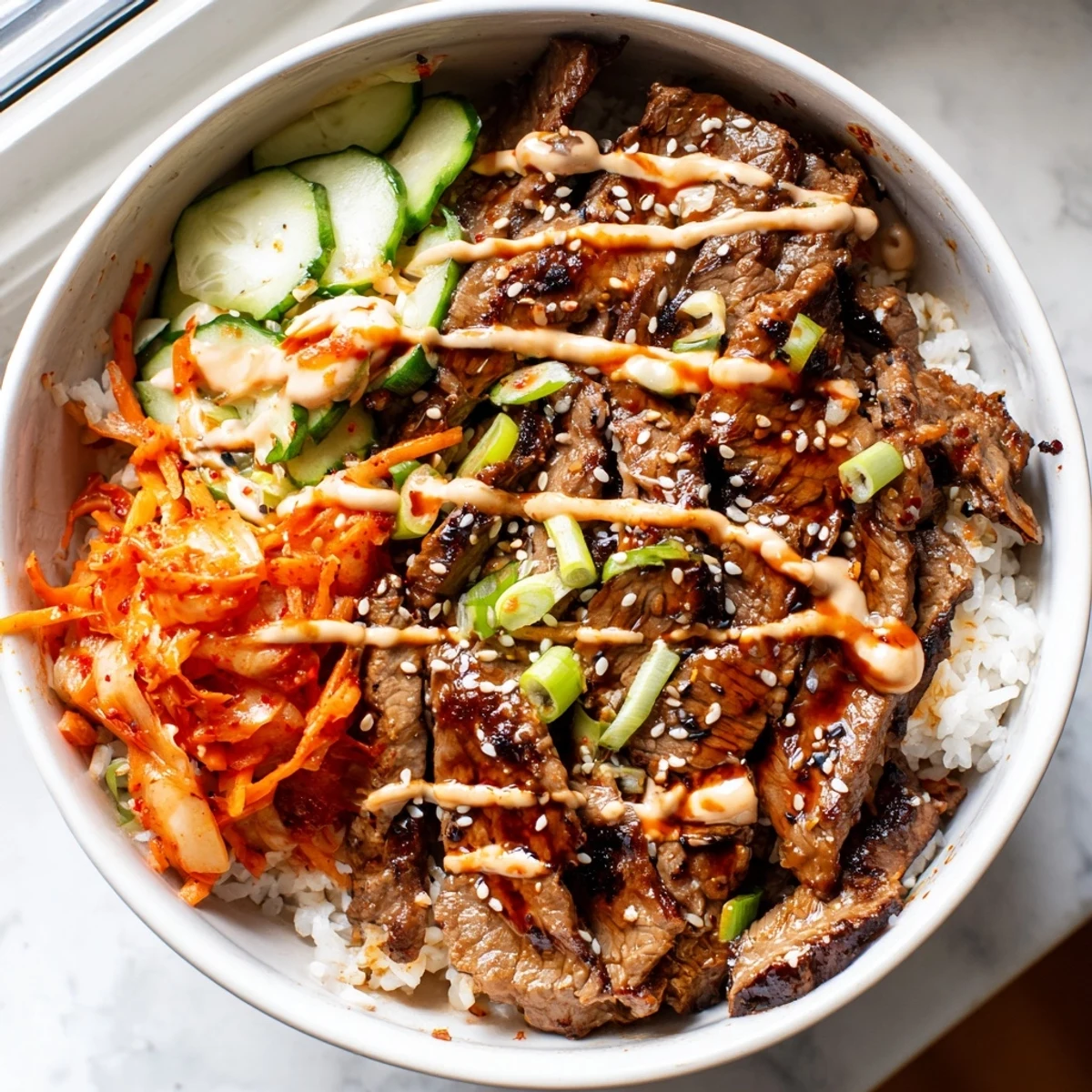
 Thinly sliced beef sirloin gets marinated in a savory-sweet blend of soy sauce, brown sugar, sesame oil, garlic, ginger, and gochujang before being seared to caramelized perfection. Served over tender jasmine rice with shredded carrots, julienned cucumber, chopped kimchi, and fresh greens, each bowl is finished with a tangy spicy cream sauce made from mayo, Sriracha, lime juice, and honey. The result is a layered, satisfying bowl that balances sweet, salty, spicy, and creamy in every bite.
My apartment smelled like a Korean street market the night I first threw these bowls together on a whim. I had leftover ribeye from a failed attempt at hot pot and a jar of gochujang that had been sitting unopened for weeks. The spicy cream sauce was pure improvisation and it turned out to be the thing that made my roommate ask for the recipe on the spot.
I made these for a small birthday dinner last spring and everyone went quiet after the first bite. That kind of silence at a table is the best compliment a cook can get. One friend literally scraped her bowl clean and asked if there was more rice.
Ingredients
- Beef sirloin or ribeye: Thinly slicing against the grain is what makes every bite tender so do not skip this step or rush through it
- Soy sauce: This is the salty backbone of the marinade so use a good quality one and swap tamari if you need it gluten free
- Brown sugar: It helps the steak caramelize beautifully in the pan and balances the salty elements
- Sesame oil: A little goes a long way here and it adds that signature nutty aroma you expect from Korean cooking
- Rice vinegar: Just enough acidity to brighten the marinade without making it sour
- Garlic and ginger: Fresh is nonnegotiable because the jarred stuff simply does not compare in a raw marinade
- Gochujang: This is where the deep fermented heat comes from and it makes the whole dish taste authentic
- Jasmine or short grain rice: Short grain sticks together better for bowls but jasmine has a lovely fragrance if that is what you have
- Shredded carrots and julienned cucumber: They add crunch and color that make the bowl feel complete and fresh
- Kimchi: Use your favorite brand because the quality of your kimchi directly affects the final bowl
- Mayonnaise: Full fat works best here because it gives the sauce body and richness
- Sriracha or extra gochujang: Adjust based on your heat tolerance but do not leave it out entirely
- Lime juice and honey: These two round out the sauce with just enough tang and sweetness to keep you coming back for more
Instructions
- Marinate the steak:
- Combine soy sauce, brown sugar, sesame oil, rice vinegar, garlic, ginger, black pepper, green onions, and gochujang in a bowl. Toss the sliced steak in until every piece is coated and let it sit for at least 20 minutes.
- Cook the rice:
- Rinse until the water runs clear, then combine with water and a pinch of salt in a pot. Bring to a boil, drop the heat, cover, and simmer for 12 to 15 minutes before letting it rest off the heat for 5 minutes.
- Whisk together the spicy cream sauce:
- Blend mayonnaise, Sriracha or gochujang, lime juice, and honey until completely smooth. Pop it in the fridge so the flavors meld while you cook everything else.
- Sear the steak:
- Get a skillet ripping hot over medium high heat and cook the steak in batches for 1 to 2 minutes per side. You want caramelization without overcrowding the pan or the meat will steam instead of sear.
- Build the bowls:
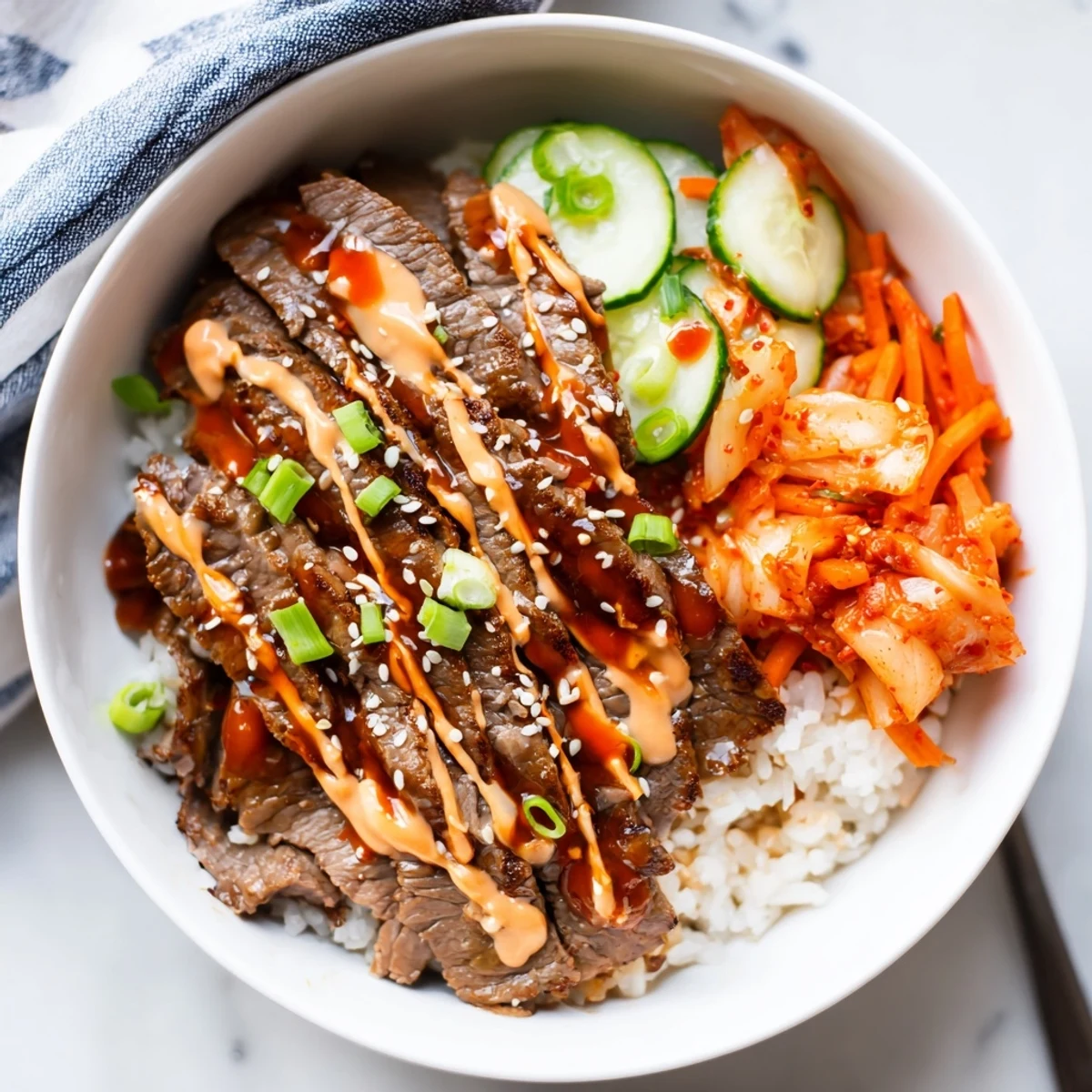
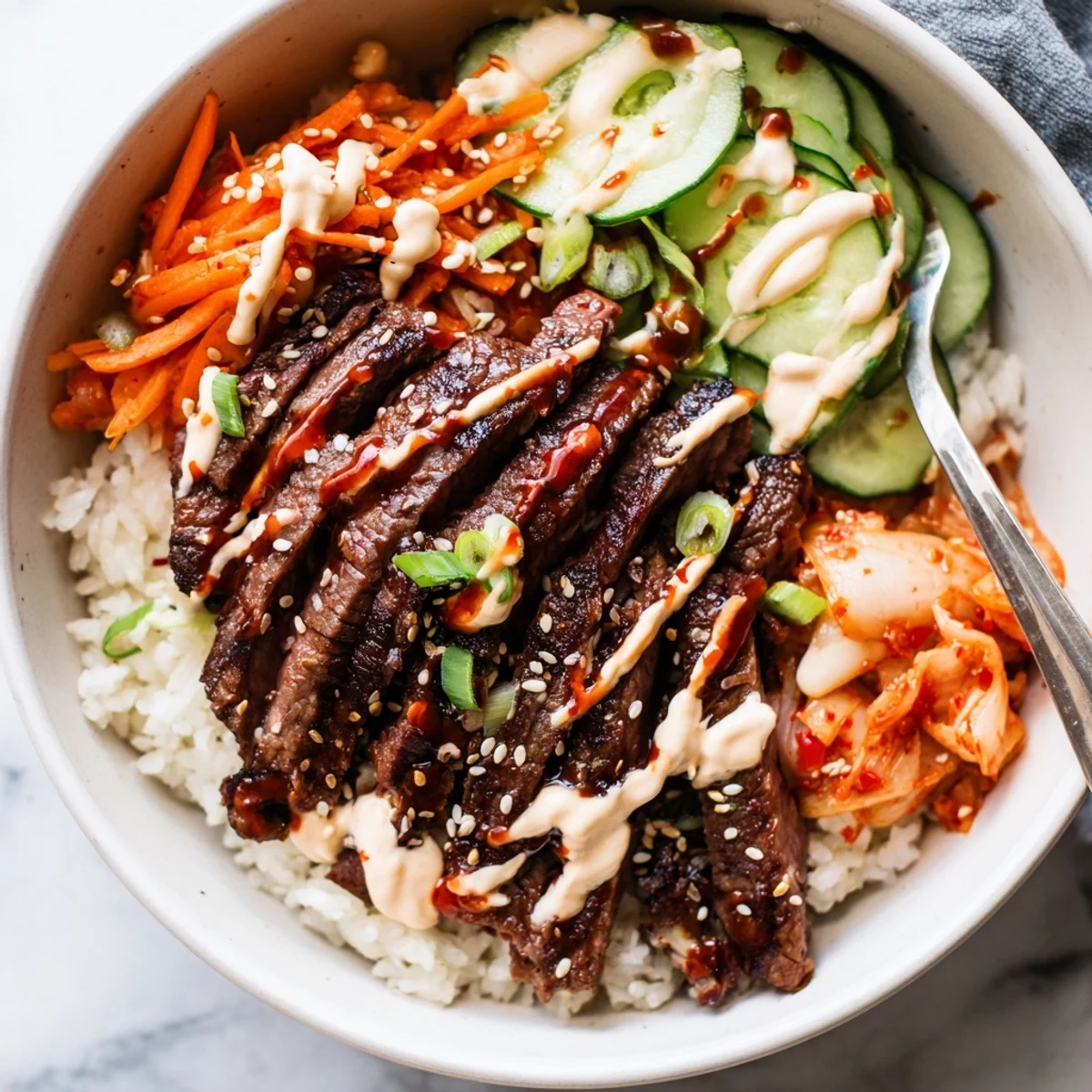
- Divide warm rice among four bowls and arrange steak, carrots, cucumber, kimchi, and greens on top. Drizzle generously with the spicy cream sauce and finish with sesame seeds and sliced green onion.
 Pin It
 These bowls became my go to comfort meal during a rainy stretch last October when cooking felt like the only thing that could lift my mood. Something about the combination of warm rice, caramelized meat, and that cool spicy sauce just works on a deeper level than most dinners.
Getting the Rice Right
I used to rush rice and end up with either mush or crunchy centers until a friend showed me the resting trick. Those 5 minutes off the heat with the lid on make a bigger difference than you would think.
Choosing Your Protein
Chicken thighs work beautifully here if you are not feeling beef, and firm tofu pressed well and sliced thin is surprisingly satisfying. The marinade is versatile enough that it makes almost anything taste like it belongs in a Korean BBQ joint.
Making It Your Own
The beauty of a rice bowl is that nothing is set in stone once you have the core elements down. I have added fried eggs, pickled radishes, and even roasted corn depending on what was in the fridge.
- A fried egg on top takes this from great to unforgettable
- Pickled daikon adds a bright crunch that cuts through the richness
- Do not forget to serve it with something cold to drink because the heat sneaks up on you
 Pin It
 Every time I make these bowls I am reminded that the best meals are usually the ones you never planned. Just good ingredients, a hot pan, and a sauce that hits all the right notes.
Recipe Questions & Answers
- → What cut of beef works best for Korean BBQ steak bowls?
-
Beef sirloin or ribeye sliced thinly works best. Both cuts are tender, take on marinade well, and sear quickly for that caramelized edge.
- → How long should the steak marinate?
-
At least 20 minutes for good flavor, but up to 2 hours in the fridge will give you a deeper, more developed taste.
- → Can I make this bowl gluten-free?
-
Yes. Swap soy sauce for tamari and verify that your gochujang brand is gluten-free. Everything else in the bowl is naturally gluten-free.
- → What protein alternatives can I use instead of steak?
-
Chicken thighs or firm tofu both work great. Adjust marinating time slightly—chicken benefits from longer marinating, while tofu absorbs flavors quickly.
- → How do I store and reheat leftover bowls?
-
Store rice, steak, and toppings separately in airtight containers for up to 3 days. Reheat rice and steak gently in the microwave or skillet, then assemble fresh with cold toppings and sauce.
- → What does the spicy cream sauce taste like?
-
It's creamy and tangy with a moderate heat from Sriracha or gochujang, balanced by honey and lime juice. It adds richness without overpowering the other flavors.