
 Pin It
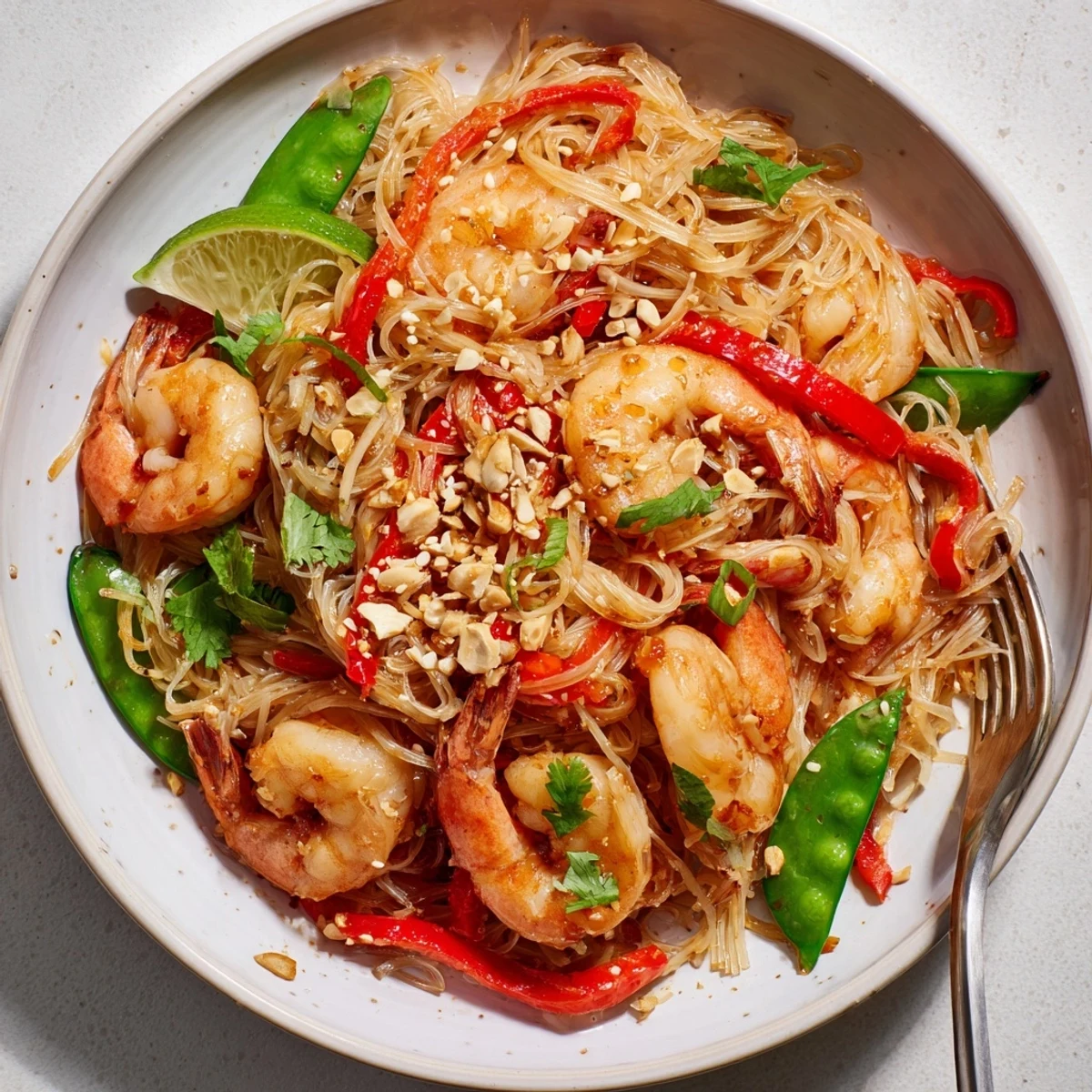
 Pan-seared shrimp and tender rice noodles are tossed with minced garlic, sliced chilies, bell pepper and snow peas in a savory soy-oyster-fish-lime sauce. Cook noodles, stir-fry shrimp briefly, then flash-cook the aromatics and vegetables before combining with sauce and noodles. Garnish with coriander, sesame and lime for brightness. Serves four; tofu swaps allow a vegetarian version.
My wok was a wedding gift that sat untouched for three years until a rainy Tuesday when the fridge offered nothing but shrimp and limp vegetables. What came out of that desperate evening was a tangle of garlic slicked noodles so good my partner ate standing over the stove, refusing to wait for bowls. Now it shows up on our table at least twice a month, sometimes dressed up with extra chilies, sometimes tamed down for guests who cannot handle the heat.
I once made this for my neighbor Elena after she helped me carry groceries up four flights of stairs. She called the next day to ask for the recipe and now texts me photos every time she makes it, each one slightly different from the last.
Ingredients
- 400 g large shrimp, peeled and deveined: Fresh or frozen both work beautifully but if frozen, thaw them completely and pat thoroughly dry so they sear rather than steam.
- 300 g rice noodles or egg noodles: Rice noodles give a lighter, silkier feel while egg noodles hold up to aggressive tossing, so pick based on the texture you crave.
- 1 red bell pepper, thinly sliced: The sweetness balances the fiery sauce and the color makes everything look like a celebration.
- 100 g snow peas, trimmed: They bring a satisfying snap and freshness that cuts through the richness of the sauce.
- 2 spring onions, sliced: Reserve a handful for garnish because the raw bite on top is surprisingly essential.
- 4 cloves garlic, minced: Do not skimp here; the garlic is the backbone of the entire dish and you want it in every single bite.
- 1 to 2 red chilies, finely sliced: Start with one and taste before adding more because you can always add heat but you cannot take it away.
- 3 tbsp soy sauce: This is your salt and your depth, the quiet workhorse of the stir fry.
- 1 tbsp oyster sauce: It adds a viscous, caramel like richness that coats the noodles and makes them glisten.
- 1 tbsp fish sauce: A small amount goes a long way toward giving the dish an umami punch that people cannot quite identify but always love.
- 1 tbsp fresh lime juice: Squeezed in at the end, it brightens everything and stops the flavors from feeling heavy.
- 1 tsp sugar: Just enough to round the edges off the salty and acidic components so nothing tastes harsh.
- 2 tbsp vegetable oil: Divided between cooking the shrimp and sauteing the aromatics so everything gets its moment in the pan.
- Fresh coriander leaves: Scattered on top at the last second for a grassy, citrusy finish.
- Toasted sesame seeds: They add a nutty crunch that makes each bowl feel finished and intentional.
- Lime wedges: For serving, because someone always wants more.
Instructions
- Prepare the noodles:
- Cook them according to the package directions, then drain and rinse under cold running water to halt the cooking and keep them from turning into a gummy clump.
- Mix the sauce:
- Whisk together the soy sauce, oyster sauce, fish sauce, lime juice, and sugar in a small bowl until the sugar dissolves, then set it within arm reach of the stove.
- Sear the shrimp:
- Heat one tablespoon of oil in a large wok or skillet over medium high heat until it shimmers, then toss in the shrimp and stir fry for two to three minutes until they curl and turn pink all over before removing them to a plate.
- Wake up the aromatics:
- Pour the remaining oil into the same pan, add the garlic and chilies, and stir frantically for about thirty seconds until your kitchen smells incredible and nothing has burned.
- Cook the vegetables:
- Add the bell pepper, snow peas, and most of the spring onions, then stir fry for two to three minutes until the peppers soften slightly but still have some fight left in them.
- Bring it all together:
- Return the shrimp to the pan, add the drained noodles, pour in the sauce, and toss everything vigorously for two to three minutes until every strand is coated and glossy and the whole mixture is piping hot.
- Serve immediately:
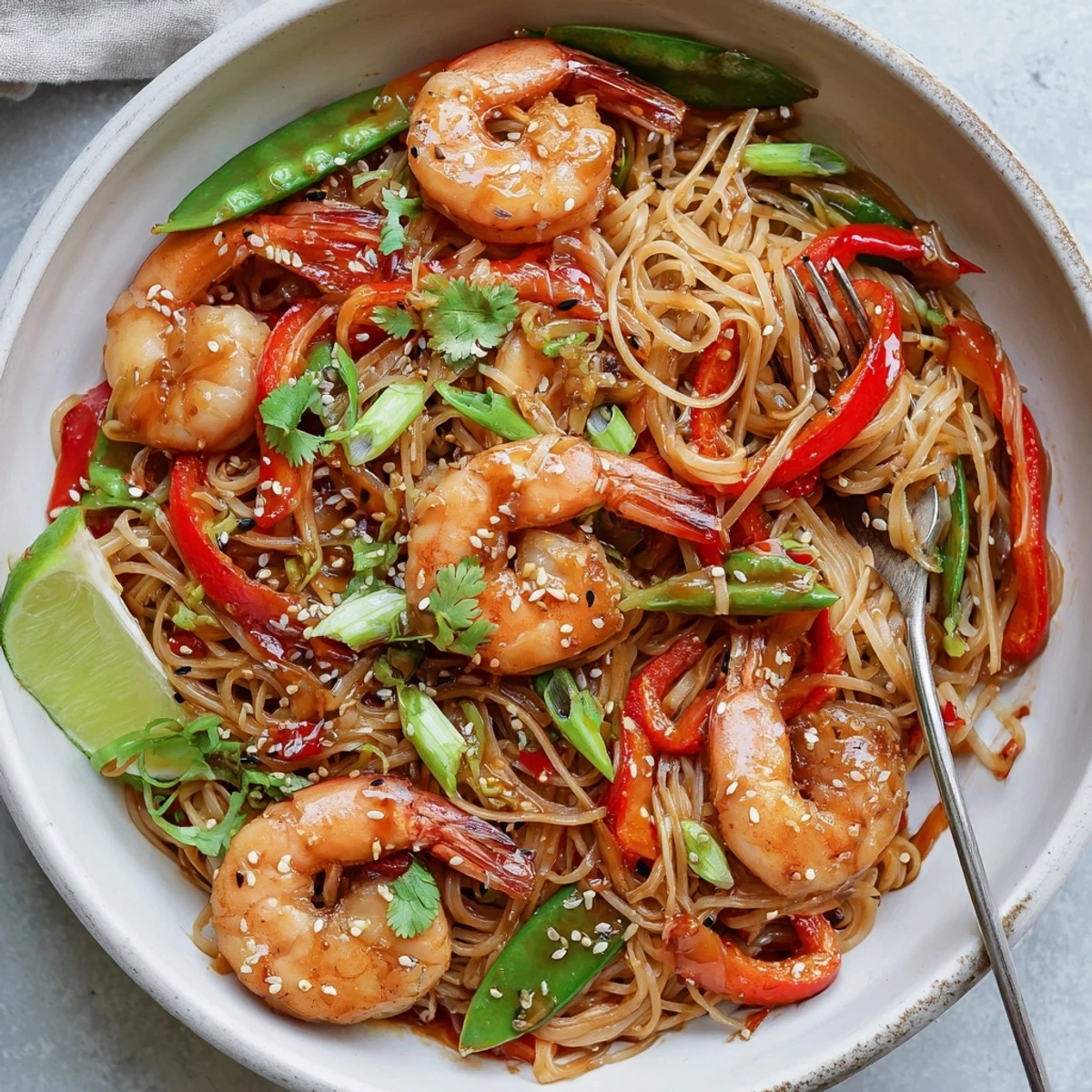
- Transfer to warmed bowls and shower with fresh coriander, toasted sesame seeds, the reserved spring onions, and lime wedges on the side.
 Pin It
 The night I realized this recipe had become part of our household rotation was when my partner started setting out the wok before I even mentioned what was for dinner.
What to Serve Alongside
A cold glass of Sauvignon Blanc alongside this dish on a warm evening feels like a small luxury that costs almost nothing. The crisp acidity of the wine plays beautifully with the salty, spicy noodles and somehow makes the whole meal taste even brighter.
Making It Vegetarian
Swap the shrimp for firm tofu pressed dry and cubed, replace the oyster and fish sauces with extra soy sauce or a store bought vegan stir fry sauce, and you have something just as satisfying. The tofu benefits from a longer sear on each side so do not rush that step.
Storing and Reheating
Leftovers keep well in an airtight container in the refrigerator for up to two days though the noodles soften a bit overnight. Reheat in a hot pan with a splash of water rather than the microwave if you want to bring back some of that original texture.
- A drizzle of sesame oil at the very end adds a toasty aroma that people always notice.
- Keep a damp paper towel over the prepared noodles if you are not cooking them right away.
- Taste the sauce before adding it to the pan and adjust the chili level to your audience.
 Pin It
 Some dishes you follow precisely and some dishes you make your own, and this one happily survives both approaches with flying colors.
Recipe Questions & Answers
- → How long should I cook the shrimp?
-
Shrimp cook very quickly—about 2–3 minutes per batch over medium-high heat until pink and opaque. Remove promptly to avoid tough, rubbery texture.
- → Which noodles work best?
-
Rice noodles give a silky finish, while egg noodles offer more chew. Follow package instructions for timing and rinse rice noodles under cold water to stop cooking and prevent sticking.
- → Can I make a vegetarian version?
-
Yes—replace shrimp with firm tofu and omit oyster and fish sauces. Use extra soy sauce or a vegan oyster alternative and keep the lime to preserve bright acidity.
- → How can I control the heat level?
-
Adjust fresh chilies and remove seeds for milder heat. Use one chili for subtle warmth, two for medium, or add chili oil/flecks to increase spice after tasting.
- → What is the best way to reheat leftovers?
-
Store cooled portions in an airtight container up to 2 days. Reheat in a skillet over medium heat with a splash of water or broth to loosen the noodles and refresh the sauce.
- → Any allergen swaps to consider?
-
This contains shellfish, soy and fish-based sauces. Substitute gluten-free tamari for soy, use vegan alternatives for oyster/fish sauces, and verify labels to accommodate sensitivities.